The door sounded fine. The opener worked. From the driveway, there was no reason to worry.
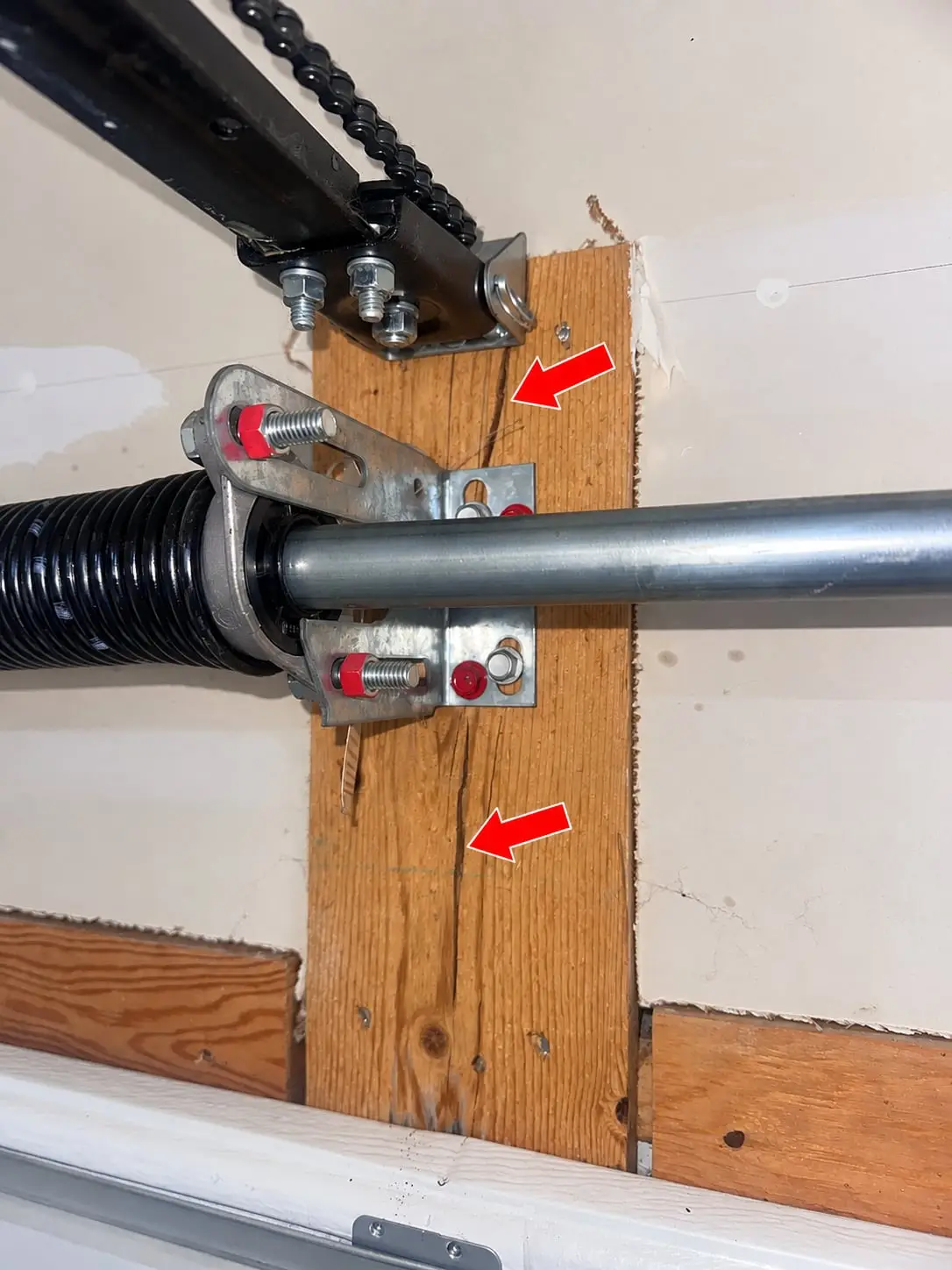
Inside the garage, the garage door spring pad and wood jambs holding its most important hardware told a different story.
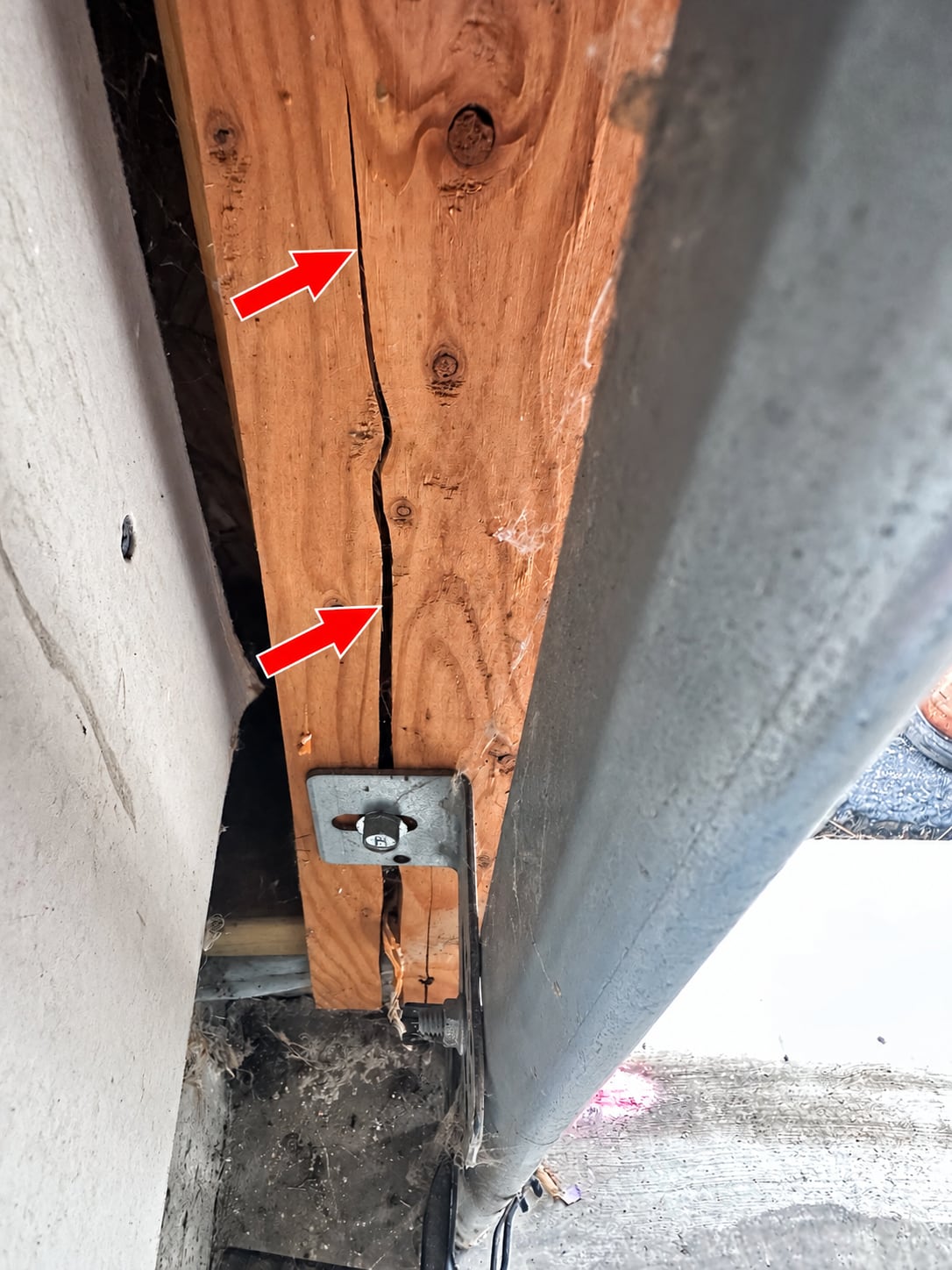
In the photo above, the split in the spring pad runs right through the area where the spring bracket’s lag screws hold, and continues up toward the opener’s header bracket.
The part most people never inspect
Springs, cables, rollers, tracks and openers get the attention. The wood behind them is easy to overlook.
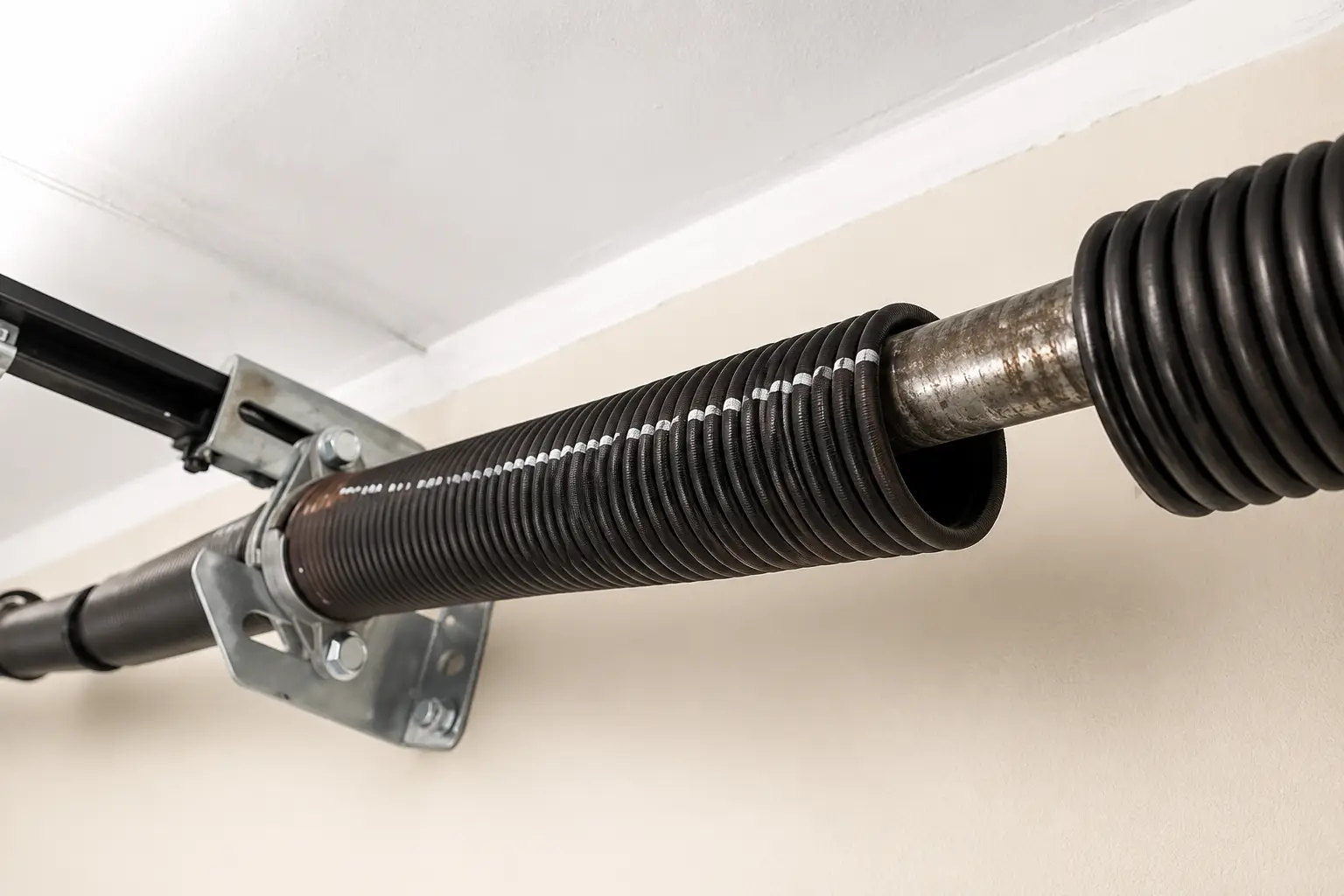
The wood jambs along each side of the opening hold the track brackets. Above the opening, a board called the spring pad holds the torsion spring‘s center bracket, also called the center bearing plate. The opener’s header bracket often mounts there too. Every one of those mounting points depends on sound wood that is solidly attached to the framing.
A door can run thousands of cycles while a split develops behind a bracket. Cracks often follow the grain near a lag screw. Fastener placement, wood quality, moisture, impact and years of vibration can all play a part.
What can happen if the spring pad or jamb gives way?
At the jamb: If a track bracket loses its hold, the track can shift out of position. The door may bind or come off track.
At the spring pad: The center bracket holds back a spring system under heavy tension. If its mounting fails, hardware can move suddenly and cause serious injury.
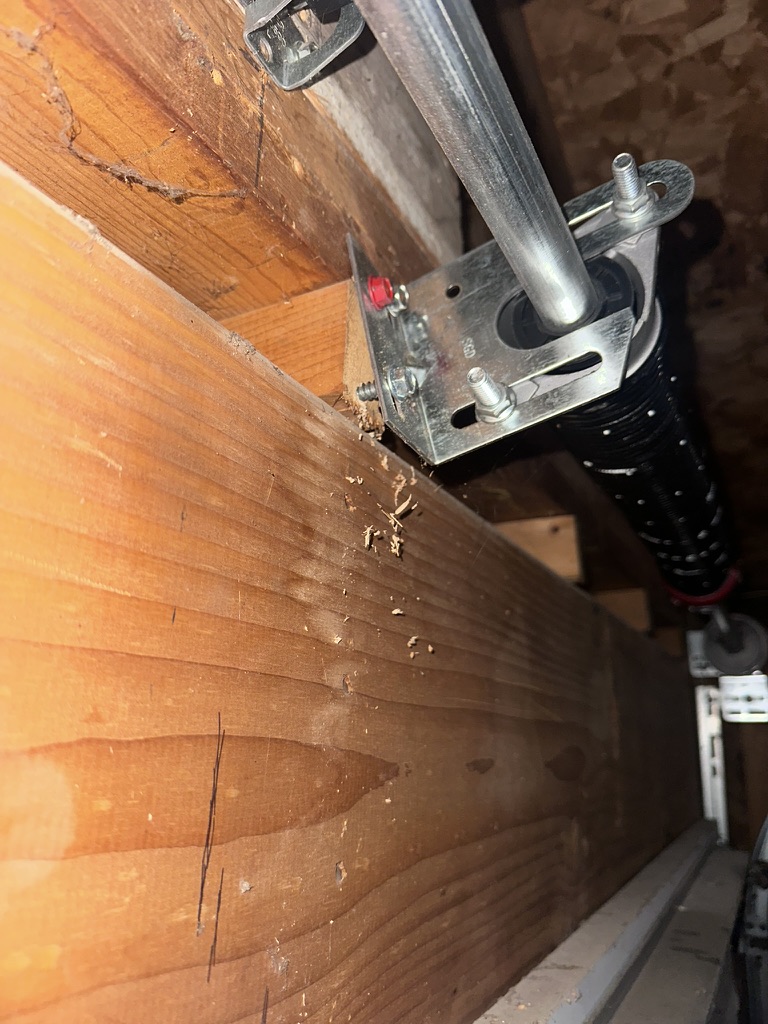
At the opener header: If the header bracket pulls loose, the opener rail can pull away from the wall. An opener can’t make up for weak framing.
These are possibilities, not a diagnosis. A photo can’t tell you how serious a particular split is. Some only need to be documented and watched. Others need repair before the door is used again. What matters is where the split runs, how deep it goes, whether anything is moving, and whether the fasteners still hold.
What an inspection should answer
The real question isn’t “Is there a crack?” It’s “Does this wood still hold this hardware securely?”
During an inspection, we check the jambs, the spring pad and the opener mounting area. We look at where each split runs relative to the lag screws and brackets, and we check for loose fasteners, movement, damaged wood and brackets that have shifted. Sawdust or wood chips collecting below a bracket, or a bracket that’s no longer flat against the wood, are signs you can spot yourself. If you see either near the spring, stop using the door and call a professional.
Then we show you what we found and recommend a next step for your door. If a split is stable, we photograph it so it can be compared at the next visit. If the spring bracket, track bracket or opener bracket is loose or moving, we recommend not using the door until it’s repaired.
Do not try to tighten or remove the bolts on a torsion spring bracket yourself. Spring hardware can stay under dangerous tension even when the door is closed. Leave spring repair and replacement to a trained technician.
What a repair usually involves
Most of these repairs are straightforward for a qualified technician. Depending on what we find, the fix may be:
- Replacing a split spring pad or jamb board
- Adding solid blocking behind the mounting area
- Re-mounting the bracket into sound wood or framing
Every repair estimate is free, and we never charge a trip fee anywhere we serve.
Why this belongs in every inspection
Lubrication can quiet a noisy hinge. It can’t tell you whether a lag screw is still holding in split wood.
That’s why Spiral Garage Door checks the mounting surfaces along with the door and opener on every visit, including every free tune-up. We document what we find, tell you whether it needs watching or repair, and explain our recommendation before doing any additional work.
Seeing a crack near your track, spring or opener mount? Call Spiral Garage Door at (612) 314-5990 to schedule an inspection. We serve Hastings and the South & East Metro, with free estimates and no trip fees.