
Resource Guide
Garage Door Repair Price Guide
How to compare estimates, understand common repair costs, and avoid paying hundreds more than necessary.
Want a straight price?Call for a written estimate before any work begins. Free estimates, no trip charge.
(612) 314-5990Overview
How to Compare Estimates and Avoid Expensive Surprises
One of the first questions people ask is, “How much is this going to cost?”
It is a fair question. It is also a question some garage door companies work very hard to avoid answering.
Most common garage door repairs are not mysterious. Standard spring replacements happen every day. Cable replacements happen every day. Garage door opener installations happen every day.
A broken garage door should not give a company permission to charge whatever it thinks you will tolerate.
Routine spring replacement should not become a $1,200 repair without a very good explanation. A standard garage door opener installation should not become a $2,000 invoice because the technician called it a premium package.
There are legitimate reasons some repairs cost more. Unusual hardware, specialty spring systems, high-cycle springs, premium openers, commercial equipment, and after-hours service can all affect pricing.
The problem is not that prices vary.
The problem is when the price has little connection to the parts, labor, or actual condition of the door.
This guide explains which repairs should usually have predictable pricing, when a custom estimate makes sense, and how to recognize when you may be getting overcharged.
Predictable Pricing
Some Repairs Should Have Predictable Pricing
Not every garage door repair can be priced over the phone.
Some can.
Common spring and cable replacements are performed often enough that an experienced garage door company should already know what it charges.
The technician still needs to inspect the door. The inspection confirms the hardware, identifies any unusual conditions, and makes sure the repair being discussed is actually the repair the door needs.
That does not mean the price should be invented after the technician arrives.
Spring Pricing
Standard Torsion Spring Replacement
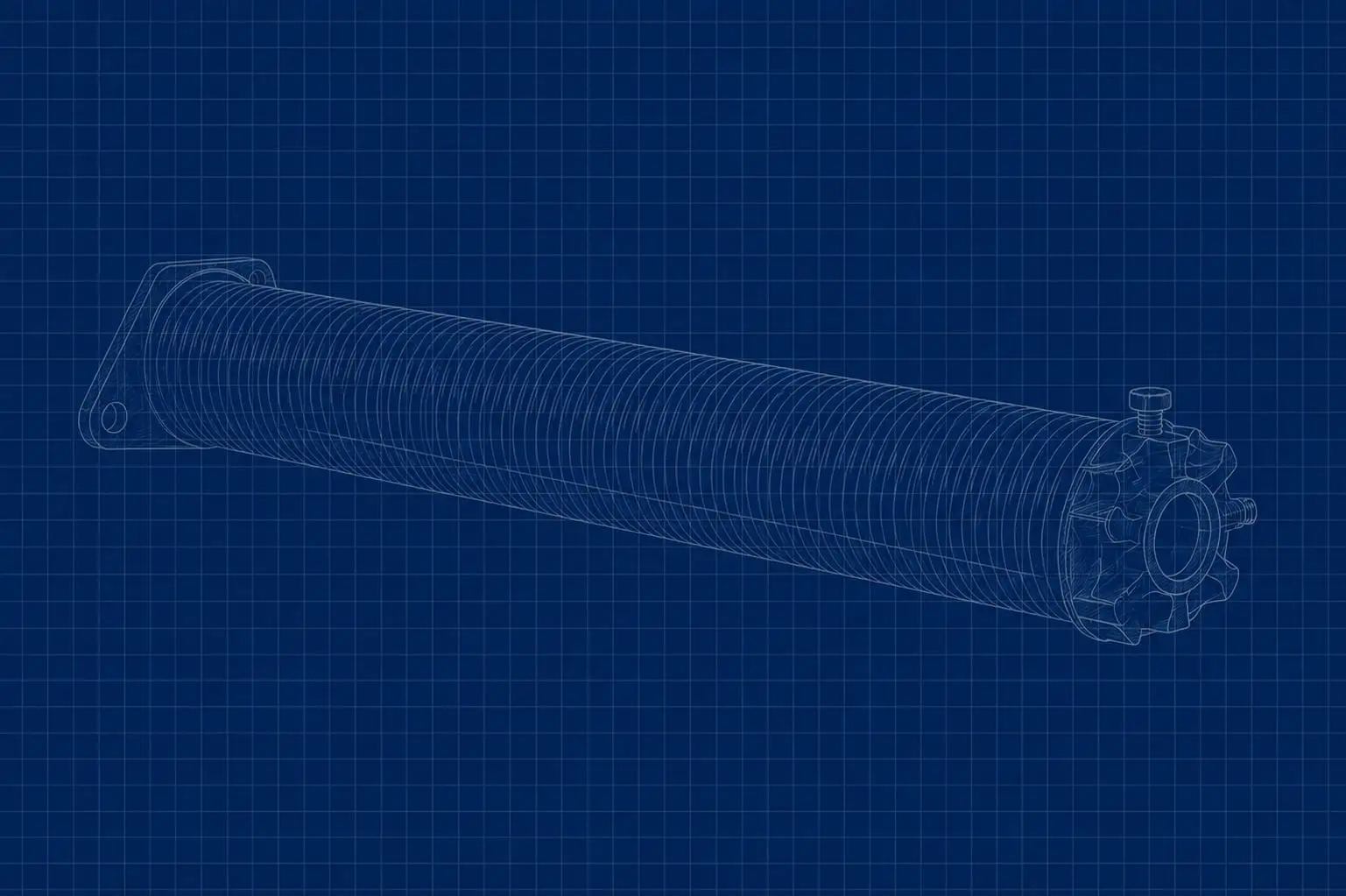
Standard torsion spring replacement is one of the most common repairs in the garage door industry.
When the door uses common production-size torsion springs with a 2-inch inside diameter and a standard 10,000-cycle rating, the company should normally have an established price for replacing one spring or two springs.
The exact spring must still be selected according to the weight and design of the door. Springs are not universal.
However, common spring sizes are common for a reason. Companies replace them regularly. The labor process is also familiar and repeatable.
A standard spring replacement should not become a blank check.
Pricing Exceptions
When Spring Pricing May Be Different
Flat-rate spring pricing may not apply when the door requires:
- Uncommon spring dimensions
- High-cycle springs
- Specialty or proprietary spring systems
- Oversized or unusually heavy hardware
- Commercial spring assemblies
- Additional repairs beyond the spring replacement
- Emergency, evening, weekend, or holiday service
These conditions can legitimately increase the cost.
The company should be able to explain exactly what makes the repair different.
“Your door is heavy” is not enough.
The technician should explain what spring is required, what cycle rating is being provided, what additional work is included, and why the standard price does not apply.
One vs. Two Springs
Single and Double Spring Replacement
Some doors use one torsion spring. Others use two.
If one spring breaks on a two-spring system, both springs have normally completed the same number of cycles. They have also been exposed to the same conditions.
Replacing both springs is the correct repair.
That recommendation should not be used to hide inflated pricing.
The company should be able to tell you:
- The price to replace one spring
- The price to replace both springs
- The cycle rating of the new springs
- Whether the price includes labor
- Whether balancing and testing are included
- Whether any other parts are being replaced
- What warranty is provided
The recommendation should make mechanical sense. The price should make sense too.
Cable Replacement
Garage Door Cable Replacement
Cable replacement is another common repair that should generally have established pricing.
Unless a cable is custom fabricated, garage door cables are sold and installed as matched pairs. Most residential garage doors use premanufactured cable sets with standard lengths and fittings. Commercial doors may also use premanufactured cable sets, but custom-fabricated cables are more common on larger or specialized door systems.
For standard residential cable replacements, a garage door company should normally know its price before arriving.
Garage door cables should always be replaced as a pair. Both cables have completed the same number of cycles and have been exposed to the same operating conditions. Installing one new cable alongside an older cable can result in unequal cable lengths as the original cable has stretched with use. Many garage door systems provide little or no practical adjustment to compensate for that difference.
Replacing only the visibly damaged cable also leaves an equally worn cable on the opposite side. The labor required to access the cables is largely the same, making a one-cable repair a poor long-term value.
Custom pricing may be appropriate for:
- Extra-tall doors
- Vertical-lift or high-lift systems
- Specialty drums
- Custom-fabricated cable assemblies
- Unusual cable terminations
- Commercial door systems
- Damaged bottom fixtures or tracks
- Additional related repairs
When a repair falls outside a standard cable replacement, the reason should be clearly explained before the work begins.
Quoted Repairs
Everything Else Should Be Quoted
Many repairs vary too much to price responsibly without seeing the door.
These repairs should be inspected and quoted.
Examples include:
- Roller replacement
- Hinge replacement
- Bearing replacement
- Track repair
- Panel or section replacement
- Structural damage
- Garage door opener repair
- Garage door opener replacement
- Commercial operator repair
- Weather seal replacement
- Unusual or discontinued hardware
A quote should clearly identify the work being proposed.
You should know:
- What failed
- What will be replaced
- What parts will be installed
- What labor is included
- What the total price will be
- Whether additional fees apply
- What warranty is included
You should know the price before the work begins.
Questionable Quotes
When a Spring Quote Should Raise Questions
There is no single fair price for every spring replacement in every market.
That does not mean every price is reasonable.
A routine spring replacement on a common garage door should not casually become a $1,200 repair.
A higher price may be justified when the job involves specialty springs, unusual hardware, high-cycle upgrades, emergency service, or additional failed components.
Without those conditions, a four-figure spring quote deserves a closer look.
Ask the technician:
- What springs are being installed?
- Are they standard-cycle or high-cycle?
- What are the spring dimensions?
- Are other parts included?
- Which additional parts have actually failed?
- Is the price higher because this is emergency service?
- What makes this different from a standard spring replacement?
- Can you provide the complete estimate in writing?
There may be a legitimate answer.
There may also be a lot of theatrical sighing, urgent phone calls to a manager, and a discount that disappears when the technician reaches the driveway.
That is not a pricing system. It is a sales routine.
Opener Pricing
A $2,000 Garage Door Opener Needs an Explanation
Garage door opener pricing varies more than spring pricing.
The total price can depend on:
- Manufacturer and model
- Rail length
- Drive type
- Lifting capacity
- Battery backup
- Cameras or smart features
- Wall-mounted or ceiling-mounted design
- Existing wiring
- Installation difficulty
- Removal of the old opener
- Additional remotes or keypads
Premium wall-mounted openers can cost considerably more than basic ceiling-mounted units. Commercial operators are a different category entirely.
Still, a common residential opener replacement should not turn into a $2,000 invoice without a detailed explanation.
Before approving an opener installation, ask for:
- The manufacturer
- The exact model number
- The equipment price
- The installation price
- Any additional parts or accessories
- The product warranty
- The labor warranty
- The reason that model is being recommended
Terms such as “premium,” “professional grade,” and “contractor model” do not tell you what you are buying.
Compare Estimates
Compare the Repair, Not Just the Total
The lowest estimate is not automatically the best estimate.
The highest estimate is not automatically a scam.
The goal is to compare the same repair.
One estimate may include only the failed part. Another may include related work that is necessary to complete the repair correctly.
Depending on the problem, an estimate may include:
- Replacement parts
- Labor
- Removal of damaged parts
- Disposal
- Door balancing
- Spring adjustment
- Cable alignment
- Lubrication
- Opener adjustments
- Safety testing
- Warranty coverage
The company should clearly separate necessary repairs from optional upgrades.
A customer should not have to reverse-engineer the estimate to figure out what is being purchased.
Pricing Tactics
Common Pricing Tactics to Watch For
Extremely Low Advertised Prices
Some companies advertise prices that seem almost too good to be true.
Sometimes they are.
The advertised amount may cover only:
- The service call
- A partial labor charge
- One inexpensive component
- A spring that does not fit most doors
- A limited promotion with numerous exclusions
The low price gets the technician into the garage.
The real sales process begins after arrival.
Before scheduling, ask what the advertised price actually includes.
The Manager Discount
The technician presents a very high price.
You hesitate.
The technician calls a manager and returns with a special discount that is only available today.
Sometimes a company genuinely allows technicians to request discounts. Sometimes the original price was inflated so the reduced price would feel like a victory.
A repair should be priced according to the work. It should not be priced according to your reaction.
The Good, Better, Best Trap
Options can be useful.
They become a problem when every option is overpriced or when the least expensive option is intentionally presented as unsafe or inadequate.
A basic repair should still be a proper repair.
The middle option should not be the only one described as reasonable.
The highest option should provide a real benefit, not a collection of vague upgrades and an impressive sounding warranty.
Everything Is Unsafe
Garage doors contain parts under significant tension. Legitimate safety problems should never be ignored.
That does not mean every worn component is an immediate emergency.
A useful inspection separates findings into categories:
- Failed and must be repaired
- Unsafe and should not remain in service
- Worn and should be planned for
- Operational and can be monitored
When every hinge, roller, bearing, cable, and bracket is presented as a crisis, ask for a clearer explanation.
After Inspection
Prices Can Change After Inspection
A phone price may change after the technician inspects the door.
That is not automatically dishonest.
The door may have different hardware than expected. Additional damage may exist. The visible symptom may not be the actual cause.
The important question is why the price changed.
A company should show you what it found. It should explain the additional work. It should provide the revised total before proceeding.
The original phone price should not vanish without explanation the moment the truck enters the driveway.
Questions to Ask
Questions to Ask Before Approving a Repair
You do not need to become a garage door technician.
You only need enough information to understand what you are approving.
Ask:
- What failed?
- What caused it to fail?
- Which parts must be replaced?
- Which recommendations are optional?
- What is included in the total price?
- What parts are being installed?
- What is the spring cycle rating?
- What is the opener model number?
- Is labor included?
- Are there service, disposal, or emergency fees?
- What warranty is included?
- Can I receive the estimate in writing?
A reputable company should be comfortable answering those questions.
Second Opinions
Should You Get Another Estimate?
Consider getting another estimate when:
- A common spring replacement approaches or exceeds four figures
- A standard opener installation approaches $1,500
- The company will not identify the parts being installed
- The technician refuses to provide written pricing
- Several unrelated parts suddenly require immediate replacement
- The price drops dramatically after you hesitate
- You are pressured to approve the work immediately
- The explanation does not make sense
A second estimate may not be convenient. It can be especially difficult when the door is stuck open or a vehicle is trapped.
Urgency still does not eliminate your right to understand the repair.
Fair Estimates
What a Fair Estimate Looks Like
A fair estimate does not need to list the company’s internal cost for every nut and bolt.
It should still be clear.
The estimate should identify:
- The problem
- The proposed repair
- The parts being installed
- The labor included
- The total price
- Additional fees
- Optional recommendations
- Warranty terms
The explanation should be understandable.
The price should not rely on fear.
The technician should not need a closing script to make the repair sound reasonable.
Bottom Line
Garage door pricing does not need to be mysterious.
Common production-size torsion spring replacements should generally have established single-spring and double-spring pricing.
Standard cable replacements should generally have established pricing.
Repairs that vary by application should be inspected and quoted before the work begins.
A routine repair should not become a financial ambush simply because the door is broken and the customer needs help.
Ask what is being installed. Ask why it is needed. Ask what is included. Get the total in writing.
A good garage door company will not be threatened by an informed customer.
The companies charging $1,200 for an ordinary spring job probably will be.
Request service
Need Garage Door Repair?
Free estimates. No high-pressure sales. Call or request service and we’ll get back to you quickly.
No trip charge
No credit card fee
Inspection included

5.0 ★★★★★
47 Google reviews
Request Service
Tell us what’s going on and we’ll follow up to schedule.