

Garage Door Spring Replacement
A broken garage door spring can leave your door heavy, unsafe, or completely inoperable. Spiral Garage Door provides professional spring replacement with properly sized springs, a complete safety inspection, and upfront pricing.
Symptoms of a Broken Garage Door Spring
A broken spring is usually obvious once you know what to look for. These are the most common symptoms.
Common Signs of a Broken Spring
Loud Bang
Sounds like something hit the garage
A torsion spring can break without warning and create a loud bang that’s often mistaken for something falling or hitting the house.
Door Won't Open
The opener runs, but the door barely moves
Without a working spring, your garage door opener isn’t designed to lift the full weight of the door by itself.
Heavy Door
The door feels much heavier than normal
If you disconnect the opener, a broken spring will leave the door extremely difficult, or impossible, to lift by hand.
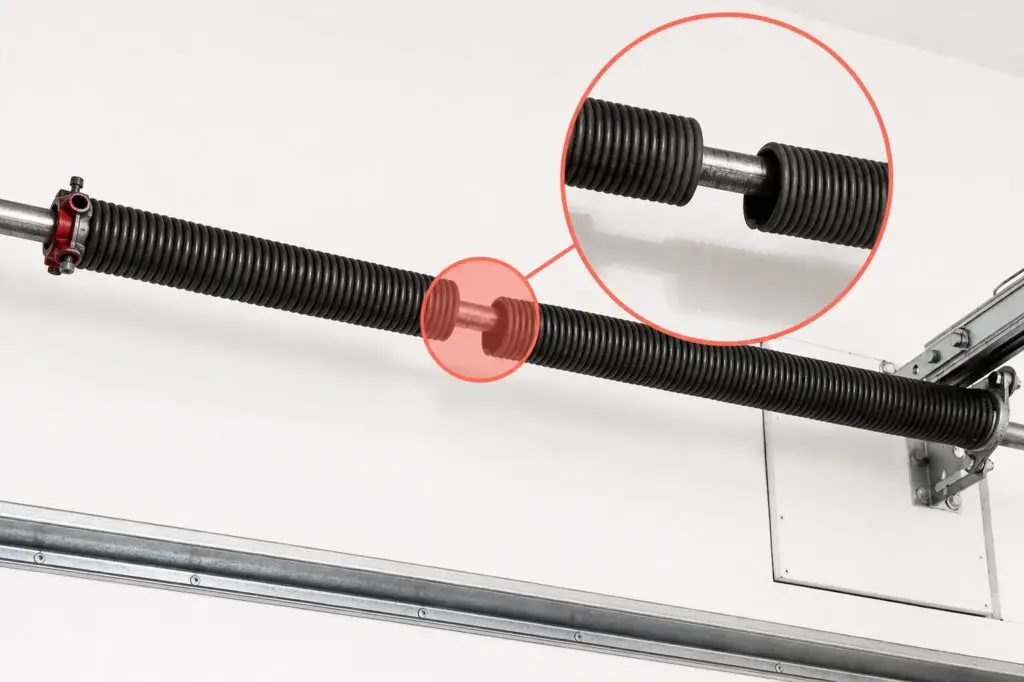
Visible Spring Gap
A broken spring is often easy to spot
Look above the garage door. A torsion spring with a 2 to 4 inch gap has snapped and needs replacement.
Opener Struggles
Don’t keep trying to force the door open
Repeatedly running the opener with a broken spring can damage the opener, drive gear, or other components.
Crooked Door
One side of the door rises before the other
If one spring has broken or a lifting cable has lost tension, the door may become uneven or bind in the tracks.
Why Your Garage Door Suddenly Feels Heavy
Garage door springs are designed to counterbalance the weight of the door. When a spring breaks, the door itself hasn’t become heavier. It becomes difficult to lift because the counterbalance system is no longer doing its job.
This is why a broken spring is often mistaken for an opener problem. The opener suddenly has to lift far more weight than it was designed to handle. In many cases, it can’t lift the door at all. Continuing to force the opener can damage the motor, gears, or other components.
Why Spring Size Matters
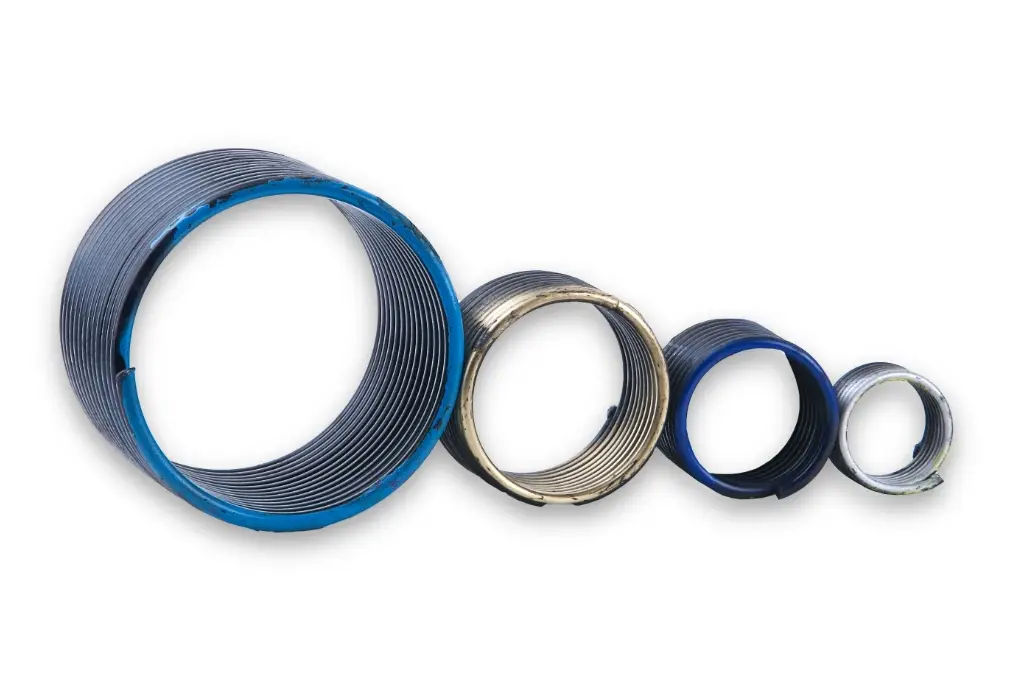
Proper spring sizing is critical to the safe, reliable operation of your garage door. Springs that are too weak make the door feel heavy, force the opener to work harder, and increase wear on cables, rollers, and other moving parts. Springs that are too strong can cause the door to open too quickly, become difficult to close, or place unnecessary stress on the system.
Every garage door is different. We select replacement springs based on your door’s weight, size, and configuration, not guesswork.
- Spiral Insight
Two garage doors that look identical may require completely different springs. That’s why professional spring replacement begins by measuring the door and selecting springs based on weight, not appearance.
Torsion Springs vs. Extension Springs
Springs lift the weight of the door. The opener simply guides it. Understanding which spring system you have helps determine the right repair.
Torsion Springs
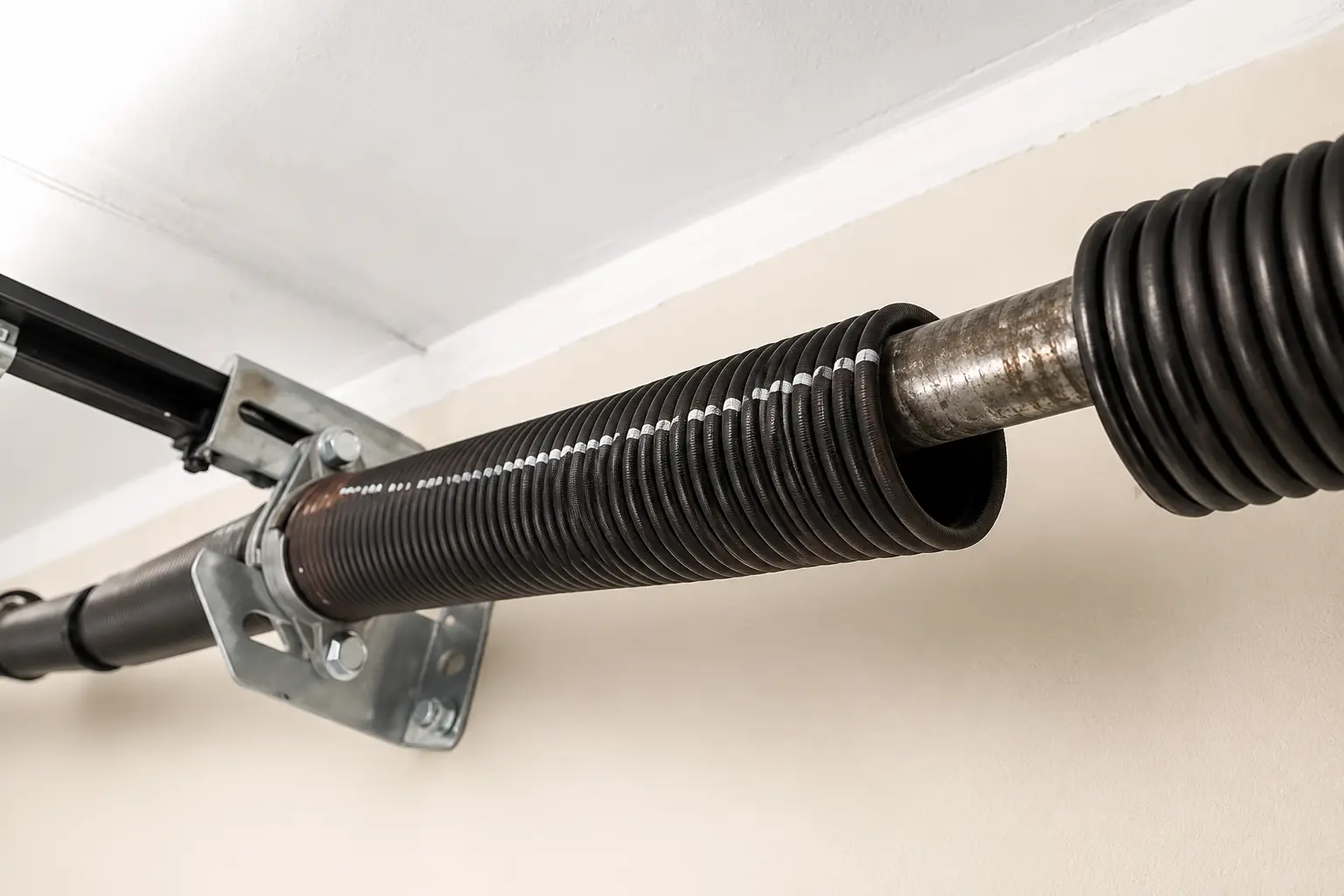
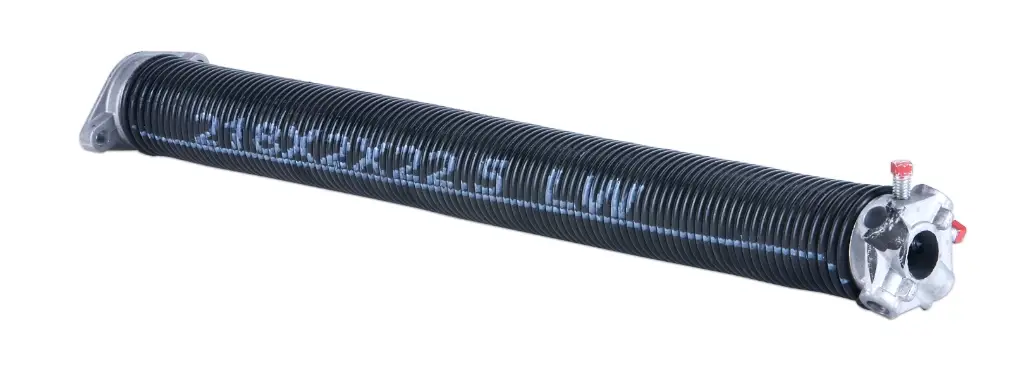
Mounted above the garage door opening, torsion springs wind and unwind on a steel shaft to safely counterbalance the weight of the door. They’re the most common spring system on modern homes.
- Standard on most modern garage doors
- Smoother, more balanced operation
- Longer service life
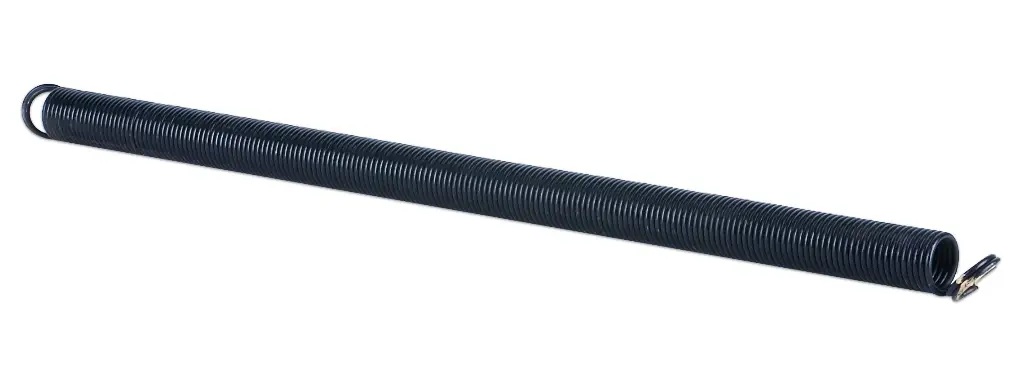
Extension Springs
Mounted alongside the horizontal tracks, extension springs stretch and contract as the door opens and closes. They’re most commonly found on older residential garage doors.
- Common on older garage doors
- Uses safety containment cables
- Can often be converted to torsion
Honest Service. No Surprises.
We do things the right way. Here’s what you can expect when you choose Spiral Garage Door.
No Trip Charges
We don’t charge just for showing up. Your money goes toward solving the problem, not getting us to your driveway.
No Credit Card Fees
Pay the way that’s most convenient for you. We never add a service charge for paying by credit card.
Inspection Included
Every repair includes a garage door inspection at no additional cost to identify worn parts before they fail.
Every Door. Every Visit.
If your home has multiple garage doors, we’ll inspect and lubricate each one at no additional charge.
Customer Reviews
See what homeowners, property managers, and businesses have to say about working with Spiral Garage Door.
 5.0Top Rated Service 2026verified by TrustindexTrustindex verifies that the company has a review score above 4.5, based on reviews collected on Google over the past 12 months, qualifying it to receive the Top Rated Certificate.

“Spiral Garage Door showed up within two hours of my call. My spring snapped and they fixed it before lunch. Good pricing, professional, couldn’t ask for more.”
Tom R.
Hastings, MN
“Had our garage door opener replaced. From the consultation to the final install, Spiral was communicative, clean, and efficient. Our new opener works amazing.”
Sarah M.
Woodbury, MN
“The opener repair was done faster than I expected. Technician explained every step and didn’t oversell me on parts I didn’t need. Rare to find that these days.”
Jake W.
White Bear Lake, MN
Simple Process. Clear Communication.
We inspect your entire garage door system to find the real cause of the problem.
We explain what we found, review your options, and answer your questions.
Once approved, we complete the repair and test the system to ensure it’s right.
Need Garage Door Repair Today?
Our Service Area
Local Roots. Regional Service.
Based in Hastings, Minnesota, Spiral Garage Door proudly serves homeowners, residential communities, and commercial facilities throughout the Greater Twin Cities and western Wisconsin.

Do We Service Your Area?
Enter your ZIP code to instantly confirm whether Spiral Garage Door provides service in your area.
Learn more about our garage door services in these communities.
Garage Door Spring Replacement FAQ
Select any question below to jump directly to the answer, or scroll to read them all.
- How do I know if my garage door spring is broken?
- Can I use my garage door if a spring is broken?
- Can I replace a garage door spring myself?
- Should both springs be replaced at the same time?
- How long does garage door spring replacement take?
- Do you service torsion and extension springs?
- Why are my garage door springs making a popping noise?
- How long do garage door springs last?
- Are upgraded springs available?
- Why did my garage door spring break?
- What causes garage door springs to wear out?
- Can a garage door opener lift a broken spring?
- How much does garage door spring replacement cost?
- Should I replace my cables too?
- Can cold weather break garage door springs?
How do I know if my garage door spring is broken?
A broken garage door spring is one of the most common reasons a garage door suddenly stops working. In many cases, the failure happens without warning.
Common signs of a broken spring include:
- The garage door won’t open or only opens a few inches.
- The door feels extremely heavy when lifting it manually.
- You hear a loud bang from the garage that sounds like a firecracker or gunshot.
- The opener struggles, stops, or reverses.
- One side of the door appears uneven while opening.
- You notice a visible gap in the torsion spring above the garage door.
If your garage uses torsion springs, look above the door. A broken torsion spring will usually have a noticeable separation where the steel coil snapped. If your door uses extension springs along the horizontal tracks, one spring may be hanging loose or appear stretched out.
It’s important to remember that not every garage door that won’t open has a broken spring. A failed opener, damaged cable, seized bearing, or other mechanical issue can produce similar symptoms. That’s why every repair at Spiral Garage Door begins with a complete inspection of the entire door system. We identify the actual cause of the problem before recommending any repairs.
Can I use my garage door if a spring is broken?
No.
Garage door springs carry nearly all of the door’s weight. When a spring breaks, that weight shifts to the opener or to anyone attempting to lift the door manually.
Continuing to operate the door with a broken spring can:
- Damage the garage door opener
- Bend the top section of the door
- Fray or break lifting cables
- Damage rollers, hinges, and drums
- Create a serious safety hazard if the door falls unexpectedly
If your garage door has two torsion springs, the second spring may temporarily allow the door to move. That doesn’t mean the system is safe to use. The remaining spring is now carrying far more weight than it was designed for and may fail shortly afterward.
If your garage door is stuck closed and you need access to your vehicle, contact a professional before attempting to force the door open. In some situations, a technician can safely disengage the system and lift the door using proper equipment.
Can I replace a garage door spring myself?
Garage door spring replacement is one of the most dangerous repairs on a residential garage door.
Both torsion and extension springs are under significant tension. A typical torsion spring stores enough energy to lift a garage door weighing between 150 and 400 pounds. If that energy is released unexpectedly during installation, serious injury can occur.
Professional technicians use specialized tools and procedures to safely:
- Release spring tension
- Select the correct replacement spring
- Install and wind the spring to the proper torque
- Balance the door
- Verify the opener settings
- Inspect related hardware for wear
Many do-it-yourself repairs fail because the replacement spring is the wrong size. A spring that’s too strong or too weak can cause the door to become unbalanced, place unnecessary strain on the opener, and shorten the life of other components.
For most people, garage door spring replacement is not a worthwhile DIY project. The risks significantly outweigh the potential savings.
Should both springs be replaced at the same time?
If your garage door has two springs, the answer is always yes.
Both springs were installed at the same time and have completed the same number of open and close cycles. When one breaks, the other has usually reached the end of its service life as well.
Replacing both springs provides several benefits:
- Restores proper door balance
- Reduces the chance of another breakdown in the near future
- Prevents uneven lifting forces
- Helps maximize opener life
- Saves the cost of a second service visit
How long does garage door spring replacement take?
Most residential garage door spring replacements take between 60 and 90 minutes.
The exact time depends on several factors, including:
- The type of spring system
- Door size and weight
- The condition of cables, bearings, and other hardware
- Whether additional adjustments are needed
Replacing the springs themselves is only part of the job.
A proper repair also includes balancing the door, inspecting the bearings and rollers, lubricating moving parts where appropriate, and setting the opener to ensure everything works together safely.
Taking the time to inspect the complete system helps prevent future problems and ensures your new springs perform as intended.
Do you service torsion and extension springs?
Yes.
We service both major types of residential garage door spring systems.
Torsion springs are mounted above the garage door on a steel shaft. They provide smoother operation, better balance, and longer service life. Most newer garage doors use torsion springs.
Extension springs are mounted alongside the horizontal tracks. As the door closes, they stretch to store energy that helps lift the door when it opens. Extension springs are commonly found on older garage door systems.
Each system requires different installation methods, adjustment procedures, and replacement parts. During our inspection, we’ll identify which spring system your garage door uses and recommend the appropriate repair.
Whether your home has a single-car door, double-car door, insulated door, or a custom overlay door, we can properly size and install the correct replacement springs.
Why are my garage door springs making a popping noise?
Garage door springs can make occasional noise as they expand, contract, and move during normal operation. A light squeak or creaking sound is often caused by dry coils and can usually be reduced with proper lubrication.
A loud pop, bang, or snapping sound is different. It often indicates that a torsion spring has broken. Many people describe it as sounding like a gunshot or a firecracker inside the garage. When a spring breaks, the stored tension is released instantly, creating a surprisingly loud noise.
If you hear a loud bang and your garage door suddenly becomes difficult to lift, won’t open, or only opens a few inches before stopping, there’s a good chance the spring has failed.
Not every popping sound comes from the springs. Rollers, hinges, tracks, and other hardware can also produce similar noises. That’s why we recommend having the entire door system inspected before replacing any parts. Identifying the true source of the noise helps ensure the correct repair is made.
If you hear a sudden loud pop, avoid operating the door until it has been inspected. Continuing to use a garage door with a broken spring can damage the opener or place additional stress on other components.
How long do garage door springs last?
Yes.
Many homeowners choose to upgrade from standard duty springs to high-cycle springs when replacement becomes necessary.
High-cycle springs are engineered with different wire sizes, coil diameters, and lengths that reduce the amount of stress the steel experiences during each opening and closing cycle. Less stress means less metal fatigue and a significantly longer service life. While every application is different, upgraded springs can often provide two to ten times the service life of standard springs.
An upgraded spring may be a worthwhile investment if:
- Your garage is your primary entrance.
- Multiple family members use the garage every day.
- You plan to stay in your home for many years.
- You want to reduce the likelihood of future spring failures.
During our inspection, we’ll explain the available options, expected lifespan, and cost differences so you can choose the solution that best fits your needs. We’ll never recommend an upgrade unless it provides real value for your specific garage door.
Are upgraded springs available?
Yes.
Many homeowners choose to upgrade from standard duty springs to high-cycle springs when replacement becomes necessary.
High-cycle springs are engineered with different wire sizes, coil diameters, and lengths that reduce the amount of stress the steel experiences during each opening and closing cycle. Less stress means less metal fatigue and a significantly longer service life. While every application is different, upgraded springs can often provide two to ten times the service life of standard springs.
An upgraded spring may be a worthwhile investment if:
- Your garage is your primary entrance.
- Multiple family members use the garage every day.
- You plan to stay in your home for many years.
- You want to reduce the likelihood of future spring failures.
During our inspection, we’ll explain the available options, expected lifespan, and cost differences so you can choose the solution that best fits your needs. We’ll never recommend an upgrade unless it provides real value for your specific garage door.
Why did my garage door spring break?
Garage door springs almost always break because of metal fatigue. Every time your garage door opens and closes, the springs wind and unwind under significant tension. Over thousands of cycles, the steel gradually weakens until it eventually fractures.
For most homeowners, a broken spring isn’t the result of something they did wrong. It’s simply a normal part of a garage door’s lifecycle.
Several factors can influence how quickly a spring wears out, including:
- The number of times the garage door is used each day
- The weight of the garage door
- Whether the springs were properly sized when installed
- The quality and cycle rating of the springs
- Corrosion from moisture or road salt
It’s common for springs to fail without warning. Many homeowners report hearing a loud bang from the garage before discovering that the door will no longer open.
Because spring failure can place additional stress on cables, bearings, rollers, and the garage door opener, it’s a good idea to have the entire system inspected whenever a spring breaks.
What causes garage door springs to wear out?
Garage door springs are designed to withstand a specific number of opening and closing cycles. Over time, the repeated twisting and stretching of the steel creates microscopic cracks that gradually grow until the spring can no longer support the weight of the door.
Several factors can accelerate that process:
- Frequent use. Homes where the garage serves as the primary entrance may cycle the door several times each day, shortening spring life.
- Improper spring sizing. Springs that are too small or incorrectly matched to the door work harder than intended and often fail prematurely.
- Corrosion. Moisture can cause rust, creating surface imperfections that contribute to fatigue over time.
- Poor door balance. Worn hardware or an improperly balanced door can increase the load placed on the springs.
Garage door springs are consumable components. Even under ideal conditions, every spring will eventually reach the end of its service life and require replacement.
Can a garage door opener lift a broken spring?
Technically, sometimes. Safely, no.
A garage door opener is designed to guide the door, not lift its full weight. The springs do the heavy lifting by counterbalancing the door.
When a spring breaks, the opener may:
- Struggle to lift the door
- Stop after moving only a few inches
- Reverse unexpectedly
- Continue running while the door barely moves
Repeatedly trying to force the opener to lift a door without spring assistance can damage the motor, drive system, trolley, or top section of the garage door.
If your door has a two-spring system, the remaining spring may provide enough assistance for limited movement. However, the system is no longer properly balanced, and the remaining spring is carrying more load than it was designed to handle.
If you suspect a broken spring, it’s best to stop using the opener until the problem has been diagnosed and repaired.
How much does garage door spring replacement cost?
The cost of garage door spring replacement depends on several factors, including:
- Whether your door uses torsion or extension springs
- Whether your door has one or two springs
- The size and weight of the garage door
- The cycle rating of the replacement springs
- Whether other worn components require attention
Because every garage door is different, there isn’t a single price that applies to every repair.
At Spiral Garage Door, every spring replacement begins with a complete inspection of the garage door system. We’ll identify the cause of the failure, verify the correct spring specifications, and provide an upfront estimate before any work begins.
Our goal is simple: recommend only the repairs your door actually needs, explain why they’re necessary, and let you make an informed decision without pressure.
Should I replace my cables too?
Not necessarily.
Garage door cables often last much longer than the springs themselves. If the cables remain in good condition, there is usually no reason to replace them simply because the springs have failed.
During every spring replacement, we inspect the cables for signs of:
- Fraying
- Broken wire strands
- Corrosion
- Kinks
- Excessive wear near the bottom fixtures or drums
If the cables are still in good condition, we’ll recommend leaving them in service. If they’re showing signs of wear, corrosion or damage, we’ll explain why replacement is appropriate and discuss your options before any additional work is performed.
We believe in replacing parts based on their condition, not simply because they’re nearby.
Can cold weather break garage door springs?
Cold weather doesn’t usually cause garage door springs to fail by itself, but it can contribute to a failure that was already about to happen.
As temperatures drop, steel becomes slightly less flexible. At the same time, lubricants thicken and garage door components may require more force to operate. If a spring has already developed metal fatigue after thousands of cycles, the additional stress of cold weather can be enough to cause it to break.
This is one reason many homeowners experience broken garage door springs during the winter months.
The cold isn’t the root cause. In most cases, the spring was already near the end of its service life, and the lower temperatures simply exposed that weakness.
If your spring breaks during cold weather, replacing it with the properly sized spring and ensuring the door is correctly balanced will restore safe, reliable operation regardless of the season.
Need Garage Door Spring Replacement?
Free estimates. No high-pressure sales.
Call or request service today.
- Fast Response Times
- Upfront Pricing
- Residential & Commercial Service
Request Service
Tell us what’s going on