
Resource Guide
Garage Door Springs
A complete guide to counterbalance systems, torsion and extension springs, wire materials, cycle life, operating environments, inspection, and industry standards.
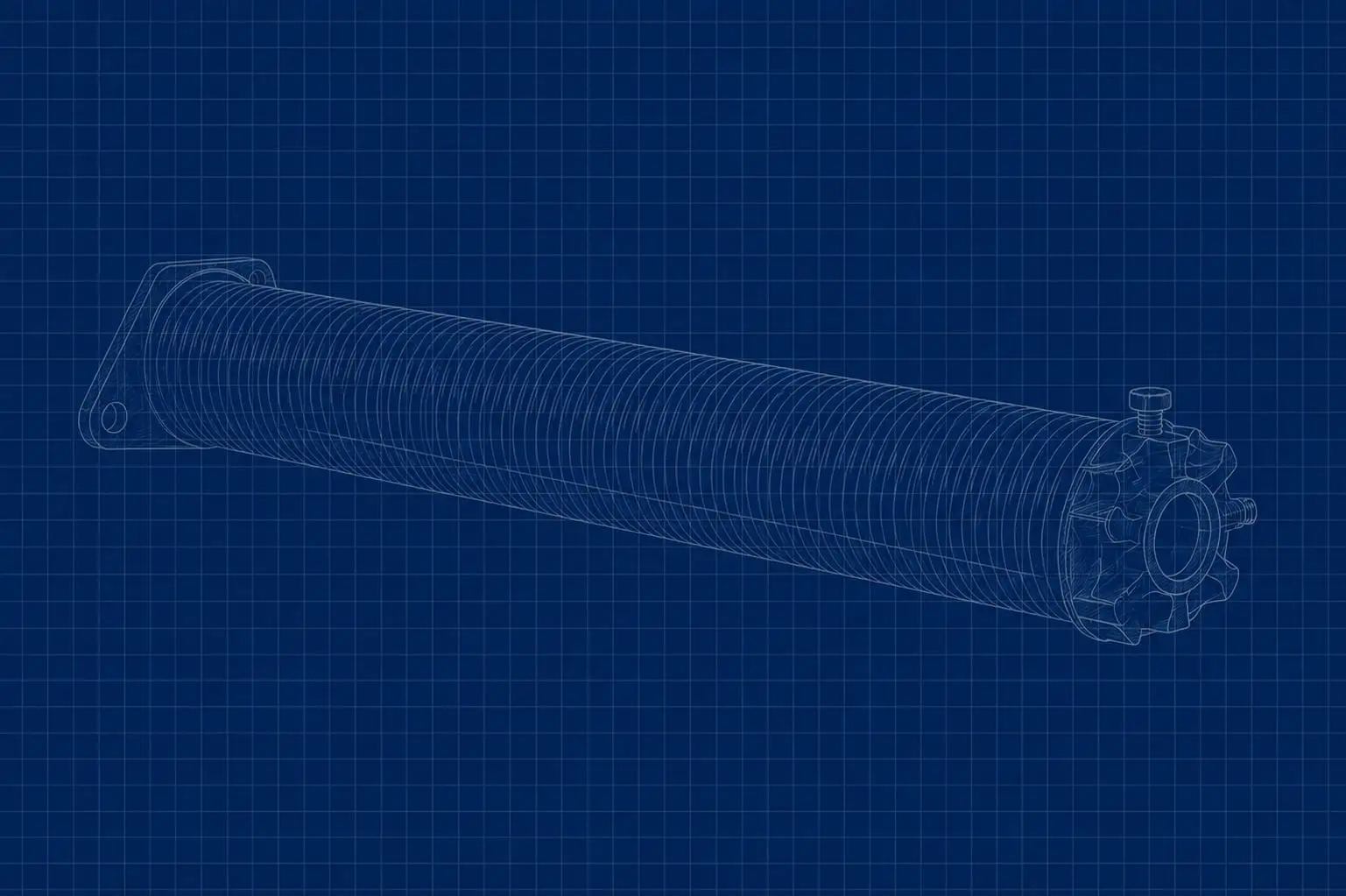
Broken spring?Don’t run the door. Call for spring replacement. Free estimates, no trip charge.
(612) 314-5990Spring Basics
What is a Garage Door Spring?
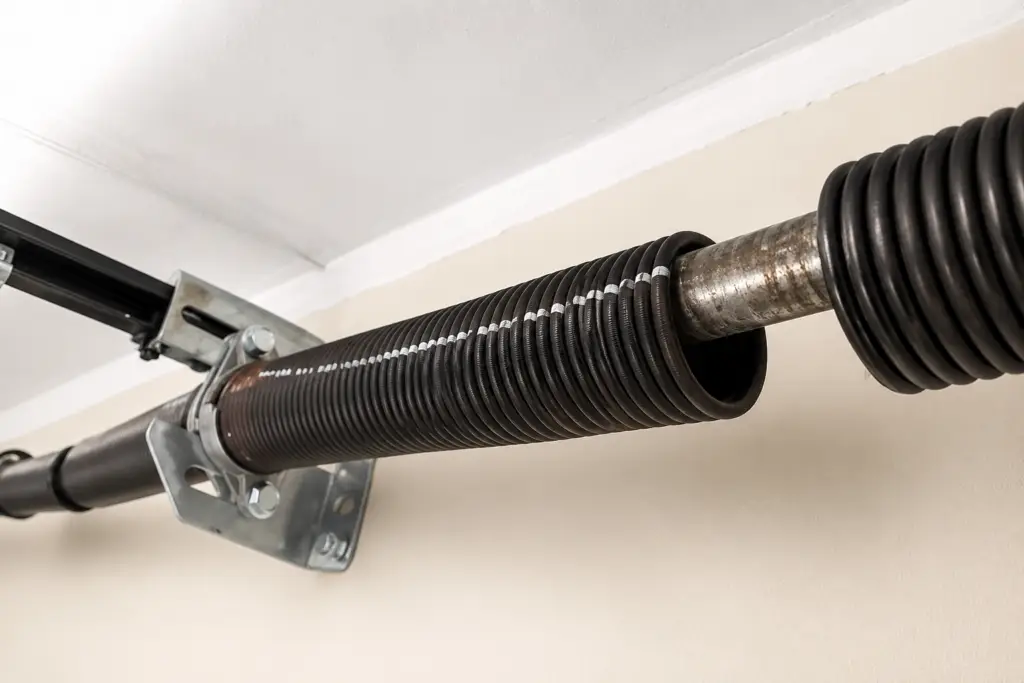
Garage door springs are often discussed as individual replacement parts. In practice, they are one part of a counterbalance system.
The correct design depends on the door, track configuration, cable drums, shaft, expected use, available space, and operating environment. Two springs can look nearly identical while producing very different torque and service life.
How Springs Work
How Garage Door Springs Work
A garage door spring stores mechanical energy. The counterbalance system uses that energy to offset most of the door’s weight throughout its travel. The goal is not to make the door weightless. It’s to make the door feel light enough to open safely and operate smoothly.
Technical NoteTorque is simply a twisting force. In a torsion system, the springs apply that twisting force to the shaft. The shaft turns the cable drums, which wind and unwind the lift cables to raise and lower the door.
Why balance changes through travel
A garage door doesn’t travel straight up and down. As it moves through the curved portion of the track, the weight acting on the springs changes. The cable drums are designed to account for those changing forces throughout the door’s travel.
Different track configurations require different drums. Standard-lift, high-lift, and vertical-lift systems each use drum profiles designed to match the way the door moves.
Spring Types
Types of Garage Door Spring Systems
Garage door springs come in several different designs. The type of spring depends on the door, the available space, and how the counterbalance system was engineered. While most residential doors use torsion or extension springs, commercial and specialty doors often use different spring arrangements.
Torsion Springs
Standard torsionThe most common spring system found on modern sectional garage doors. One or two springs mount on a steel shaft above the door. As the springs unwind, they rotate the shaft and cable drums to lift the door.
High-liftAllows the door to travel vertically before following the horizontal track. Common in garages with tall ceilings or vehicle lifts.
Full verticalThe door remains vertical throughout its travel. Most often used in commercial and industrial buildings with sufficient overhead space.
Duplex and triplexTwo or more springs are nested together to produce greater lifting force while fitting within limited shaft space. These systems require application-specific parts and service procedures.
Rear torsionThe spring shaft is mounted behind the horizontal tracks instead of above the door. This configuration is used where headroom is limited or for certain specialty applications.
Extension, Specialty & Proprietary
Sectional door extension springsExtension springs stretch as the door closes and contract as it opens. Pulleys and lift cables transfer that stored energy to help lift the door. While once common on residential garages, they are less common on new installations today.
Rolling-door barrel springsRolling steel doors often hide their springs inside the barrel above the opening. These systems look very different from sectional garage doors and use different spring designs and replacement procedures.
Manufacturer-specific systemsSome garage doors use proprietary spring boxes, torque tubes, enclosed spring systems, and other proprietary designs. These designs require model-specific replacement parts and service procedures.
Torsion Specs
Understanding Torsion Spring Specifications
Wire DiameterThe thickness of the spring wire. Small dimensional changes can materially affect torque and stress.
Inside DiameterThe internal diameter of the spring body. It must match the intended fittings and available clearance.
Body LengthThe unwound spring length, excluding fittings unless otherwise specified.
Active CoilsThe working coils that twist as the spring winds and unwinds. They determine how much torque the spring produces.
Stationary ConeThe fitting that anchors one end of the spring to the spring anchor bracket or supporting assembly.
Winding ConeThe fitting used to apply turns and secure the spring to the shaft.
IPPTInch-pounds per turn. A measure of torque delivered to the shaft for each turn applied to the spring.
Wind DirectionSprings are manufactured with either a right-hand or left-hand wind. The winding direction is determined by the spring itself, not simply where it’s mounted on the door.
Common MisconceptionTwo springs can look almost identical while producing completely different lifting force. Matching only the inside diameter or overall length is not enough. Wire size, winding direction, torque, and cycle rating all determine whether a spring is the correct replacement.
Cones, plugs, and spring ends
Springs use different end fittings depending on their design. Torsion springs use stationary and winding cones, while extension springs may use loops, threaded plugs, clipped ends, or other specialty fittings. These parts are not universally interchangeable.
Materials
Wire Materials and Protective Finishes
The material and protective finish affect how well a spring resists corrosion, tolerates different environments, and performs over time. Choosing the right material depends on where the door operates as much as the spring itself.
Oil Tempered WireThe most common material used for garage door torsion springs. Oil-tempered wire provides an excellent balance of strength, fatigue resistance, and value. It performs well in most residential and commercial applications where corrosion is not a major concern.
Galvanized WireA zinc coating helps protect the spring from surface rust and corrosion. Galvanized springs are often chosen for humid or corrosive environments, although the coating alone does not necessarily increase spring life.
Stainless Steel WireStainless steel offers excellent corrosion resistance in wet, humid, or chemically aggressive environments. It is commonly used where rust protection is more important than minimizing cost.
Specialty AlloysSome industrial applications require spring materials designed for extreme temperatures, corrosive chemicals, or unusually high cycle demands. These springs are selected for very specific operating conditions.
Paint / Powder CoatingSome springs receive painted or powder-coated finishes for identification, appearance, or limited environmental protection. These coatings should not be confused with the spring’s underlying wire material.
Application MattersCar washes, food processing facilities, agricultural buildings, wastewater plants, and coastal environments often require different spring materials or protective finishes than a typical residential garage.
Spring Selection
How Garage Door Springs Are Selected
Technicians commonly identify a torsion spring by its wire diameter, inside diameter, body length, and wind direction. Choosing the correct replacement involves much more than matching those measurements. Door weight, drum profile, track configuration, shaft length, required turns, and expected cycle life all influence the final spring selection.
Spring RateSpring rate describes how much lifting force a spring gains with each turn. It is one of the primary characteristics used to match a spring to a specific door.
Spring IndexSpring index describes the relationship between the spring’s wire size and coil diameter. It influences manufacturing limits, durability, and how the spring performs under repeated use.
Spring GrowthA torsion spring becomes slightly longer as it is wound. The shaft, bearings, and nearby hardware must provide enough clearance for that movement during normal operation.
Why substitutions must be calculated
A longer spring made from heavier wire can sometimes produce the same lifting force while operating at lower stress. That can increase theoretical cycle life. Any substitution must still fit the available shaft space, clear surrounding hardware, stay within allowable turns, and maintain proper door balance.
More Than Matching DimensionsTwo springs with the same inside diameter and overall length may lift a door very differently. Safe spring selection requires matching the complete counterbalance system, not just the measurements stamped on an old spring.
Spring Life
How Long Do Garage Door Springs Last?
One spring cycle consists of one complete opening and one complete closing of the garage door. A cycle rating is an engineering estimate based on controlled conditions. It is not a guarantee that every spring will reach that exact number of cycles, nor is it a warranty for a specific lifespan.
Estimated service life by daily use
Real-world service life varies. Springs on frequently used doors accumulate cycles much faster than those used only occasionally. Environmental conditions, corrosion, maintenance, and proper spring selection also affect service life.
Daily use
10,000-cycle spring
Est. life
2 cycles/day
13.7 yrs
5 cycles/day
5.5 yrs
10 cycles/day
2.7 yrs
20 cycles/day
1.4 yrs
Life = 10,000 cycles ÷ (cycles per day × 365). One cycle is one full open and close.
How fatigue develops
Every time a spring winds and unwinds, the steel flexes slightly. Over thousands of cycles, microscopic cracks can form and gradually grow until the remaining wire can no longer support the load. Corrosion, surface damage, excessive stress, and harsh environments can accelerate this process.
Cycle Life Is Not System LifeInstalling high-cycle springs does not increase the service life of cables, bearings, rollers, hinges, or other garage door components. Springs are only one part of the counterbalance system.
Life Factors
What Affects Spring Life?
Garage door springs operate in a wide range of environments. Temperature, moisture, corrosion, and operating conditions can all influence performance and service life. While these factors don’t change a spring’s cycle rating, they can affect how long it lasts in real-world applications.
Cold WeatherCold can stiffen seals and lubricants. It can increase operating resistance. An existing fatigue crack may reach final failure during a cold period without cold being the original cause.
MoistureCondensation, road salt, coastal air, wash-down procedures, and chemical exposure can promote surface corrosion and pitting.
HeatHigh ambient temperatures, radiant heat, and repeated temperature swings can affect lubricants, coatings, and system operation.
Corrosive FacilitiesMaterial selection, protective finishes, inspection frequency, and replacement planning should reflect the actual environment.
Rust does more than change a spring’s appearance. Surface corrosion and pitting reduce the effective wire area and create stress concentrations where fatigue cracks can begin. Keeping springs clean and dry can help reduce corrosion, but no coating or lubricant can restore fatigue life that has already been consumed.
Applications
Spring Requirements by Application
Residential Sectional Doors
Residential garage doors typically cycle only a few times each day. Most use standard torsion springs designed to balance the door’s weight while providing years of reliable operation. Higher-cycle springs may be a worthwhile upgrade for doors that see frequent daily use.
Residential Community Doors
Apartment buildings and shared parking garages often experience significantly higher daily cycle counts than a typical single-family home. Higher-cycle springs, more frequent inspections, and planned maintenance help reduce unexpected downtime and emergency repairs.
Commercial Sectional Doors
Commercial sectional doors vary widely in size, weight, and daily use. Spring selection must account for the door’s weight, track configuration, operating frequency, and the expected operating cycle. Loading docks, service bays, and fleet buildings often require higher-cycle springs than typical residential applications.
Industrial & Specialty Doors
Manufacturing plants, warehouses, food processing facilities, and other industrial environments often expose springs to heat, moisture, chemicals, or continuous operation. Spring material, protective finishes, inspection intervals, and replacement planning should reflect the operating environment as well as the door itself.
Rolling Doors
Rolling steel doors use a different counterbalance design than sectional doors, with springs typically housed inside the barrel above the opening. These systems require application-specific springs and service procedures based on the door’s size, weight, and operating conditions.
Application Drives Spring SelectionThe right spring is determined by far more than the size of the door. Daily usage, operating environment, available space, required cycle life, and the door’s counterbalance design all influence spring selection. A spring that performs well in one application may be completely unsuitable in another.
Inspection
Inspection and Preventive Maintenance
Spring inspection should be part of a complete garage door system evaluation. A broken spring is often the visible failure, but it is not always the underlying problem. The condition of the entire counterbalance system should be evaluated before replacement parts are selected.
Inspection Points
- Corrosion, pitting, distortion, or broken coils
- Cracked, loose, or damaged cones and fittings
- Spring anchor attachment and structural support
- Shaft alignment, couplers, keys, and set screws
- Bearings and cable drums
- Lift cables and cable tracking
- Extension spring containment components
- Door balance throughout travel
- Changes to door weight or hardware
Service Records
- Door identification and location
- Door weight and track configuration
- Spring specifications, including wire size, inside diameter, length, and wind direction
- Drum number and shaft arrangement
- Turns, cycle rating, and installation date
- Estimated daily usage
- Inspection and replacement history
- Environmental or operational changes
The entire system matters
Garage door springs rarely fail in isolation. Worn bearings, damaged cables, misaligned shafts, improperly sized springs, and changes to the door itself can all affect performance and service life. Evaluating the complete counterbalance system helps identify underlying problems before they lead to repeat failures.
Lubrication Has LimitsAppropriate lubrication can reduce friction and help slow surface corrosion. It cannot reverse metal fatigue, repair pitting, correct an improperly selected spring, or compensate for damaged or binding hardware.
Failure Analysis
Failure Analysis
Most garage door springs eventually fail from metal fatigue, but that is not the only cause. Corrosion, improper spring selection, installation damage, and changes to the counterbalance system can all shorten spring life or contribute to premature failure. Identifying the root cause helps prevent repeat failures.
Fatigue FractureMicroscopic cracks grow over thousands of operating cycles until the wire can no longer support the load. This is the most common end-of-life failure mode.
CorrosionRust and pitting reduce the spring’s effective wire area and create stress concentrations where fatigue cracks can begin.
Installation DamageNicks, scratches, dropped springs, incorrect winding, damaged castings, or shaft damage can reduce spring life or create premature failures.
Application MismatchIncorrect spring selection, incompatible drums, changes to door weight, or improper track geometry can overload the counterbalance system and reduce service life.
Fitting FailureCones, plugs, anchors, fasteners, and extension spring end fittings can fail independently of the spring body.
Loss of BalanceSpring relaxation, worn bearings, cable problems, friction, or changes to the door can cause the door to lose proper balance before a spring actually breaks.
Failure Doesn’t Always Start at the BreakA broken spring is often where the problem becomes visible, but it is not always where the problem began. Identifying the underlying cause helps reduce the likelihood of repeat failures and unnecessary repairs.
Standards
Standards, Codes, and Industry Guidance
Not all industry documents serve the same purpose. A building code requirement, a manufacturer’s installation instructions, a voluntary ANSI standard, a DASMA technical data sheet, and an IDA educational resource each provide a different type of guidance.
ANSI/DASMA 102
Sectional overhead-type doors. Relevant to performance characteristics and test methods for sectional door assemblies.
ANSI/DASMA 103
Counterbalance systems on residential sectional garage doors. The standard provides approaches for addressing access to and removal of counterbalance components.
ANSI/DASMA 109
Life-cycle testing for sectional doors. Spring design cycles should not be presented as the cycle life of the complete door assembly.
DASMA TDS 151
General code inspection guidance. Includes topics such as spring-pad attachment and extension-spring containment systems.
DASMA TDS 160
Sectional garage-door terminology. Defines terms including IPPT and high-cycle spring.
DASMA TDS 172
Garage-door warning labels and spring safety tags.
DASMA TDS 190
Factors affecting spring cycle life, including application, handling, environment, corrosion, and maintenance.
IDA / IDEA
Industry education, accreditation, safety communication, and professional-development resources. IDA is a trade association, not a code-enforcement authority.
Authority Having JurisdictionApplicable requirements vary by door type, occupancy, location, adopted building code, fire rating, listing, and manufacturer. Fire doors, high-performance doors, and other specialty products may be subject to additional standards beyond the scope of this guide.
Request service
Need Garage Door Repair?
Free estimates. No high-pressure sales. Call or request service and we’ll get back to you quickly.
No trip charge
No credit card fee
Inspection included

5.0 ★★★★★
47 Google reviews
Request Service
Tell us what’s going on and we’ll follow up to schedule.